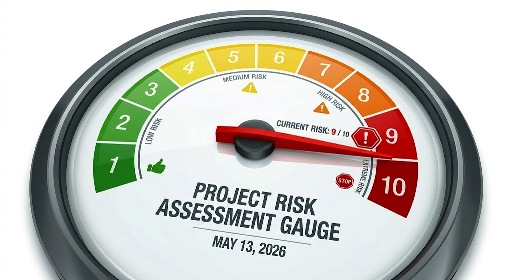
Based on the provided document, transitioning to an ST 2110 IP fabric involves several project and engineering risks compared to legacy baseband setups. Here are the primary risks identified and how they are mitigated:
- Unbudgeted Software Scope Creep: In an IP bridge reality, there is a risk of untracked software expansion. This must be managed by actively auditing logical device subscriptions, multicast scale, and control plane API integration boundaries whenever a client requests new logical endpoints, extra audio streams, or control modifications.
- Procurement and Capability Mismatches: There is a risk of purchasing hardware that lacks the necessary capabilities or correct software licenses. This requires validating exact SFP+/QSFP media modules, software license packages (such as enabling NMOS or adding ST 2110-30 audio channels), and explicit control plane protocol compliance maps before procurement.
- System and Node Failures: If a critical node like a spine switch or primary grandmaster fails, the facility risks going off-air. To mitigate this, engineering teams must enforce true SMPTE ST 2022-7 hitless path protection (using dual, independent network fabrics routing split streams simultaneously) and mandate deterministic failovers rather than relying on manual software reconfigurations during an incident.
- Poor Project Hand-Off: Failing to properly transition technical parameters to the core engineering team before system building begins can jeopardize the deployment path. Upfront discovery materials—including multi-vendor API capacities, switch port profiles, and bandwidth models—must be cleanly structured and transferred.
- Client Disconnection from Virtualized Workflows: Clients accustomed to legacy baseband may struggle to interpret IP routing. Early conceptual drawings must be used as an educational tool to acclimate the client to reading multi-layered virtual multicast routing maps over VLANs, rather than old physical floor boxes.